

Eight Mistakes That Can Upend Your Retirement
Retirement is the goal most people work toward their entire adult lives. Yet a surprising number of Americans arrive at it underprepared, not because they failed to care, but because they made common planning errors that compounded quietly over time. Some of these mistakes are about behavior. Some are about strategy. All of them are fixable, especially if you catch them early.
In my practice, I see these eight mistakes come up again and again. None of them are signs of bad character or poor intelligence. They are simply the gaps that appear when people navigate a complex financial system without a clear map.
1. Starting too late
The single most powerful force in retirement savings is time. A 25-year-old who saves $300 a month will retire with significantly more than a 40-year-old who saves $600 a month, even though the older saver is contributing twice as much. That is not intuition. That is compound growth doing its work over decades.
The good news is that wherever you are right now is still a starting point. The cost of waiting another year is real, but it is almost always smaller than the cost of not starting at all. If you have been putting off getting serious about retirement savings, the time to act is now, not after the next raise or the next life event settles down.
2. Not capturing the full employer match
If your employer offers a 401(k) match and you are not contributing enough to capture all of it, you are leaving part of your compensation on the table. An employer match is an immediate 50% or 100% return on your contribution, depending on the plan structure. No investment available to the average person comes close to that kind of guaranteed return.
Yet many employees contribute just enough to get started, or settle at a rate they set years ago and never revisited. Check your plan documents. Find out exactly what the match formula is and what percentage you need to contribute to receive every dollar of it.

3. Treating retirement accounts like a savings account
Early withdrawals from a 401(k) or IRA before age 59½ typically trigger a 10% penalty on top of ordinary income taxes. Depending on your tax bracket, that can mean losing 30% or more of every dollar you withdraw. Yet hardship withdrawals and 401(k) loans remain surprisingly common, particularly when people change jobs or face unexpected expenses.
When you leave a job, rolling your 401(k) into an IRA or your new employer's plan protects those funds and keeps them working. Cashing out, even partially, is one of the most expensive decisions a retirement saver can make. The math rarely works in your favor, and the lost compounding is permanent.
4. Underestimating how long retirement will last
A 65-year-old American today has a reasonable chance of living into their late 80s or beyond. A married couple at 65 has better than even odds that at least one spouse will live past 90. That means retirement is not a 10-year event. For many people, it will last 25 to 30 years or longer.
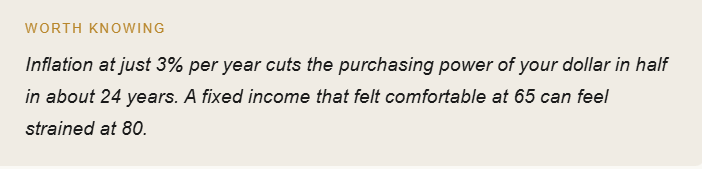
Planning only for the years immediately after you stop working is a mistake that does not reveal itself until it is very difficult to correct. Your retirement income strategy needs to account for inflation eroding your purchasing power, healthcare costs that tend to rise significantly in later years, and the very real possibility that you will outlive your assumptions.
5. Claiming Social Security too early
You can begin collecting Social Security at age 62, but doing so permanently reduces your benefit by as much as 30% compared to waiting until your full retirement age. And for every year you delay beyond full retirement age up to age 70, your benefit grows by an additional 8%. That is a guaranteed, inflation-adjusted increase that no market investment can reliably match.
The right time to claim depends on your health, your other income sources, and whether you are married. But the default assumption that earlier is always better is simply not true for many people. This decision deserves careful analysis, not a reflexive grab at the earliest available date.
The families who retire with confidence are almost never the ones who earned the most. They are the ones who made consistent, informed decisions over a long period of time.
6. Ignoring taxes in retirement
Many people save diligently into traditional 401(k)s and IRAs for decades, then are surprised to discover in retirement that every dollar they withdraw is taxed as ordinary income. Add required minimum distributions beginning at age 73, the potential for Social Security benefits to become partially taxable, and Medicare premium surcharges triggered by higher income, and you can face a significant tax burden in your retirement years.
Roth accounts, tax-efficient withdrawal sequencing, and strategic Roth conversions in lower-income years are all tools that can dramatically reduce your lifetime tax liability. Tax planning is not just an accumulation-phase strategy. It matters deeply in the distribution phase as well.
7. Failing to plan for healthcare costs
Fidelity estimates that the average couple retiring today will need approximately $315,000 to cover healthcare expenses in retirement, not including long-term care. Medicare helps, but it does not cover everything. Premiums, deductibles, copays, dental, vision, and hearing all add up, and they tend to grow faster than general inflation.
Healthcare is often the largest variable expense in retirement and one of the least planned for. A Health Savings Account, if you are eligible, is one of the most powerful vehicles available for funding future medical costs. Contributions are tax-deductible, growth is tax-free, and withdrawals for qualified medical expenses are also tax-free. That is a triple tax advantage no other account offers.
8. Going it alone without a plan
Retirement planning has become genuinely complex. Between investment allocation, Social Security optimization, tax strategy, Medicare choices, estate planning, and income sequencing, the number of moving parts is significant. Making good decisions across all of them requires both knowledge and discipline, and the cost of getting them wrong compounds over time just as interest does.
Working with a fee-based CFP who is legally obligated to act in your best interest is not a luxury reserved for wealthy families. It is a practical decision that often pays for itself many times over. A good advisor brings structure, accountability, and expertise to decisions that most people will make only once in their lives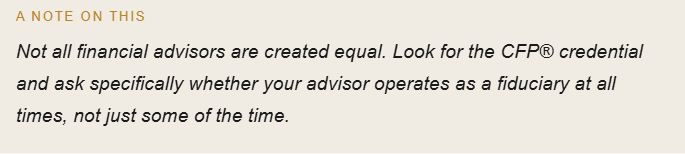
None of these mistakes require extraordinary discipline to avoid. They require awareness, a willingness to take an honest look at where you are, and a plan that accounts for where you want to go. The earlier you address them, the more options you will have.
If any of these eight points resonated with you, it may be time to take a fresh look at your retirement strategy. That conversation is always worth having.
Is your retirement plan on track? Whether you are just getting started or approaching retirement, a clear-eyed review of your strategy can make a meaningful difference. I work with individuals and families to build retirement plans that hold up to real life. Let's find time to talk.