What Does a Financial Advisor Actually Do — And Do You Need One?
There is an irony in the financial advice industry that does not get talked about enough. The people who would benefit most from working with a good financial advisor are often the ones least sure about what a financial advisor actually does, how they get paid, and whether the relationship is worth the cost. And because that uncertainty is uncomfortable, many people simply delay the decision indefinitely, navigating some of the most consequential financial choices of their lives without the guidance that might make the biggest difference.
This article is an attempt to answer those questions plainly and honestly, from someone who has spent a career doing this work. What does a financial advisor actually do? What should you expect from that relationship? How do you tell a good one from one who is just going through the motions? And how do you know if you need one at all?
What a financial advisor actually does
The short answer is that a good financial advisor helps you make better financial decisions across every area of your life, coordinated into a coherent plan that moves you toward your goals while managing the risks that could derail them along the way. But that description is abstract, so let me make it concrete.
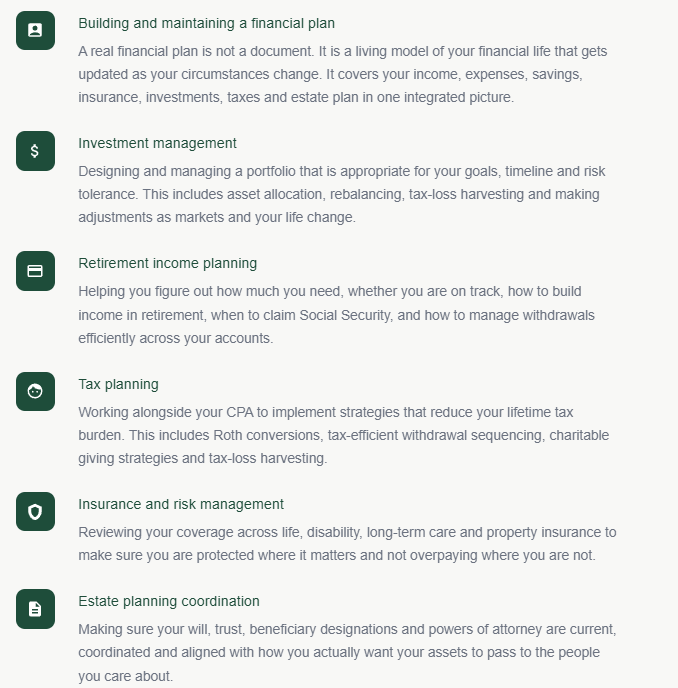 But beyond the technical services, the most valuable thing a good advisor provides is something harder to put on a list: a trusted relationship with someone who knows your full financial picture and helps you make clear-headed decisions during the moments when emotions are highest and clarity is hardest to find.
"The value of a financial advisor is not just what they do when everything is going well. It is what they do when markets drop, when a spouse passes away, when a job ends unexpectedly, or when a major financial decision needs to be made quickly."
The fiduciary question everyone should ask
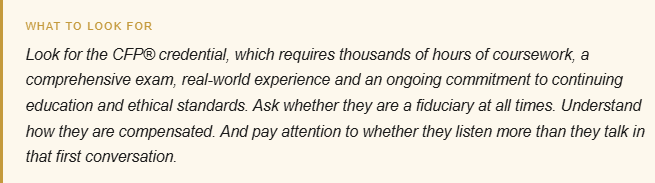
Not all financial advisors are the same. One of the most important distinctions in the industry is whether an advisor is a fiduciary, meaning they are legally required to act in your best interest at all times, or whether they operate under a suitability standard, meaning they only need to recommend products that are suitable for your situation, even if a better option exists.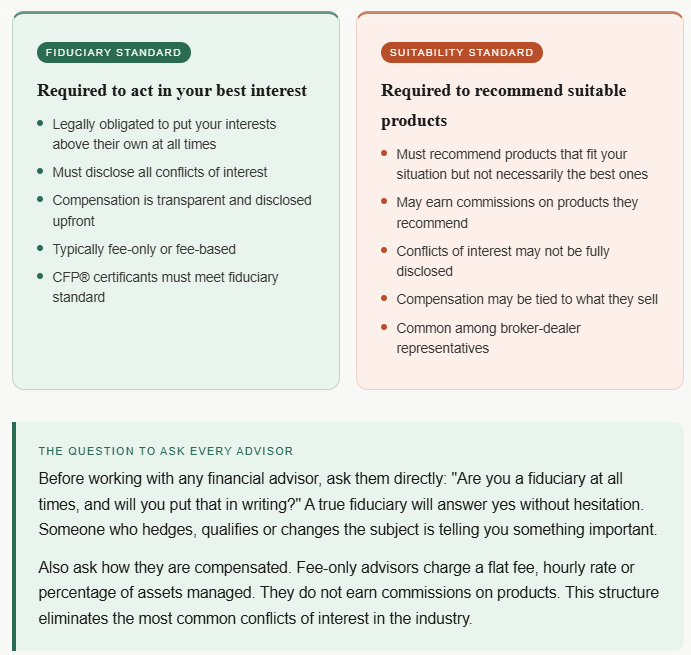
The myths that keep people from getting help
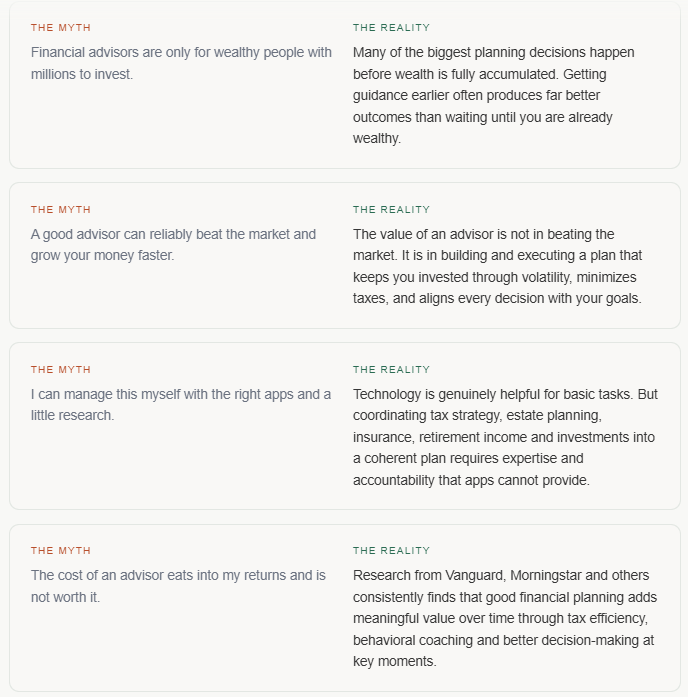
There are a handful of beliefs about financial advisors that are so common and so incorrect that they are worth addressing directly, because they prevent a lot of people from getting guidance that would genuinely change their financial lives.
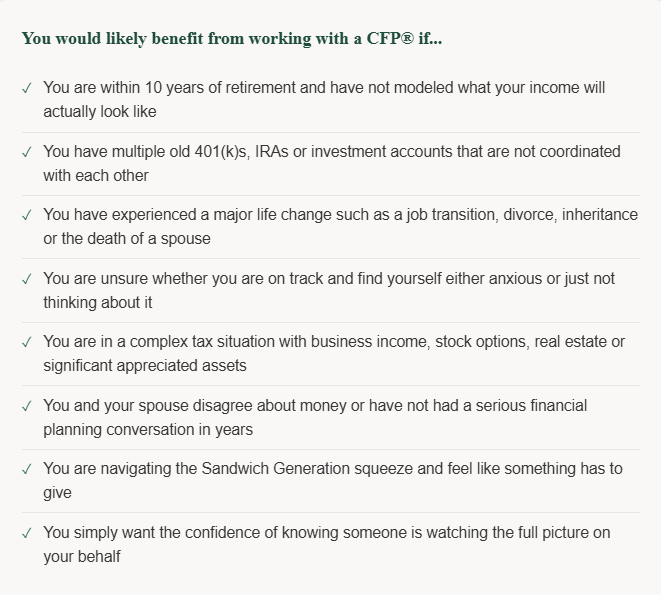
How do you know if you actually need one?
Not everyone needs a full-service financial advisor at every stage of life. But there are moments and circumstances where having one in your corner makes a measurable difference.
What the first conversation actually looks like
One of the reasons people delay working with a financial advisor is that they imagine the first meeting as something formal and intimidating, a judgment of their financial life so far. In reality, a good first conversation is exploratory. It is about understanding where you are, where you want to go, and whether the relationship is a good fit for both sides.
You do not need to have everything organized before you call. You do not need to have a certain amount saved. You do not need to have your act completely together. What you do need is a genuine interest in getting clearer about your financial future and a willingness to be honest about your current situation. Everything else can be built from there.
The right advisor will not make you feel behind, embarrassed or sold to. They will make you feel heard, and they will leave you with a clearer sense of your situation than you had when you walked in. If that is not the feeling you get from an initial conversation, trust that instinct and find someone who is a better fit.